Beyond Khachapuri: A Foodie’s Guide to Traditional Georgian Cuisine (2026)
Beyond Khachapuri: A Foodie’s Guide to Traditional Georgian Cuisine (2026)
Created by: Vitistravel
December 7, 2025
If you have heard of Georgia, you have likely heard of Khachapuri. The image of that boat-shaped bread, overflowing with molten cheese, butter, and a runny egg, has become an Instagram icon worldwide. And yes, tasting it for the first time is a religious experience.
But to say that Georgian cuisine is just cheese bread is like saying Italian cuisine is just pizza. It misses the point entirely.
Sitting at the crossroads of East and West, Georgian food is a chaotic, colorful, and delicious blend of Mediterranean freshness, Persian spices, and robust Caucasian flavors. It is a cuisine of walnuts, pomegranates, wild herbs, and meats roasted over vine wood. It is food designed for sharing, for toasting, and for celebrating life.
At Vitis Travel, we believe you cannot understand Georgia without tasting it. Whether you join us for a Private Culinary & Wine Tour or explore the hidden taverns of Tbilisi, here is your guide to going beyond the basics in 2026.
1. The Philosophy of the "Supra" (Feast)
In Georgia, eating is not a biological necessity; it is a social ritual. The Supra is a traditional feast led by a Tamada (toastmaster). The table is not served course-by-course. Instead, plates are stacked on top of plates—a symbol of abundance and hospitality.
When you book a cultural tour with Vitis Travel, we often arrange authentic Supras where you don't just eat; you participate in the toasts-to God, to peace, to women, to children, and to the ancestors. It is an emotional journey where strangers become family over wine and bread.
2. The Heavyweights: Dishes You Must Try
Khinkali: The King of Dumplings
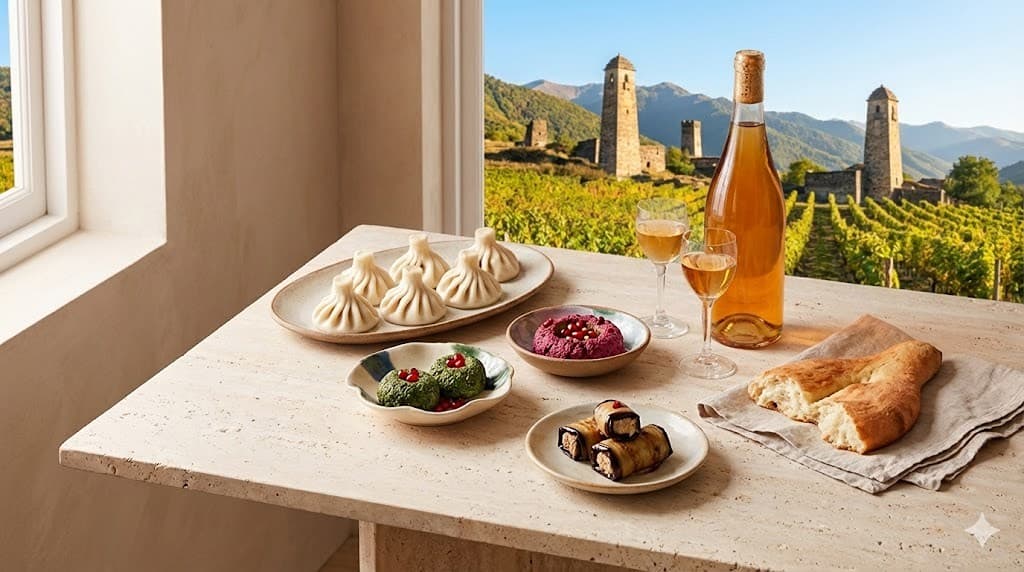
If Khachapuri is the queen, Khinkali is the king. These are large, twisted knobs of dough filled with spiced meat (usually beef and pork) and, crucially, a hot, savory broth.
The Rule: Never use a fork and knife! It is considered a crime against culture.
The Technique: Pick it up by the top knot (the "kuchi"), bite a small hole, suck out the juice (loudly is fine!), and then devour the rest. Leave the tough knot on the plate to show how many you have conquered.
Pkhali: The Vegetarian Masterpiece
Vegetarians, rejoice! Georgia is a plant-based paradise. Pkhali is a general term for vegetables (spinach, eggplant, beet greens, or cabbage) that are minced and mixed with a rich paste of walnuts, garlic, vinegar, and traditional spices like blue fenugreek.
Presentation: They are usually served as colorful round balls, topped with pomegranate seeds. The texture is creamy (thanks to the walnuts) and the flavor is an explosion of savory freshness.
Badrijani Nigvzit (Eggplant Rolls)
This is the superstar of the Pkhali family. Fried strips of eggplant are slathered with walnut-garlic paste and rolled up. The contrast between the silky, oily eggplant and the nutty filling is perfection.
3. Regional Specialties Worth Traveling For
Georgia is small, but its regions have distinct flavors.
Samegrelo (West Georgia): Known for spicy food and generous use of cheese.
Try: Elarji—cornmeal boiled with absurd amounts of Sulguni cheese until it becomes a stretchy, elastic mash. It is captivating to watch being made.
Racha (Highlands):
Try: Shkmeruli—roasted chicken simmered in a bubbling clay pan of garlic and milk sauce. It is simple, rustic, and incredibly addictive. You will need plenty of bread to soak up the sauce.
Kakheti (East Georgia): The land of wine and meat.
Try: Mtsvadi—skewered pork or veal roasted over glowing vine branches (not charcoal). The burning grapevines impart a unique, sweet smokiness to the meat that you cannot replicate anywhere else.
Experience it yourself: Taste the authentic Mtsvadi on our Kakheti Wine & Culinary Escape.
4. The Sweet Finish: Georgian "Snickers"
You will see them hanging in stalls all over Tbilisi—long, waxy, candle-shaped treats. This is Churchkhela.
What is it? Walnuts or hazelnuts are threaded onto a string and dipped repeatedly in "Tatara"—a thick, boiled mixture of grape juice and flour.
The Taste: It is chewy, not too sweet, and packed with energy. Ancient Georgian warriors used to carry them for sustenance. Today, they are the perfect hiking snack.
5. Pairing Food with Amber Wine
You cannot talk about Georgian food without the wine. The tannins in traditional Amber (Qvevri) wine act as a palate cleanser for the rich, walnut-heavy dishes.
Pairing Tip: Fatty meats (Mtsvadi) go best with a robust Saperavi (Red). Lighter appetizers (Pkhali) shine with a Rkatsiteli (Amber) that has skin contact structure.
FAQ: Your Culinary Questions Answered
Here are the practical details every foodie needs to know before visiting Georgia in 2026.
Is Georgia vegetarian-friendly?
Absolutely. Unlike many other cuisines in the region, Georgian food relies heavily on vegetables, beans (Lobio), cheeses, and walnuts. You can have a full, diverse feast without ever touching meat. During religious fasting periods (Lent), restaurants offer even more vegan options.
Is the water safe to drink?
In Tbilisi and major mountain resorts, tap water is generally safe and high quality.
However, for short trips, we usually recommend bottled water to avoid any adjustment issues. Georgia produces world-famous mineral waters like Borjomi (salty and fizzy) and Nabeghlavi, which are excellent for digestion after a heavy meal.
How much should I tip in restaurants?
Check the bill first.
Most restaurants in Tbilisi and tourist areas will automatically add a 10% to 15% "Service Charge" to the total bill. This goes to the staff. If you want to leave extra for great service, another 5-10% in cash is appreciated, but not mandatory.
Are there food tours available?
Yes, and they are the best way to learn.
It is easy to get stuck eating the same three dishes. A guided food tour introduces you to local markets, hidden bakeries, and regional specialties you might miss. At Vitis Travel, we specialize in custom private tours that can be tailored entirely around food and wine.
Ready to Taste Georgia?
Reading about Shkmeruli is one thing; dipping hot Shotis Puri bread into that garlic sauce is another. In 2026, let your taste buds lead the way.
🍷 Book Your Culinary & Wine Adventure
🍇 Explore Our Private Tour Packages
💬 Contact Us to Plan a Foodie Itinerary