The Cave Cities of Georgia: Uplistsikhe vs. Vardzia
The Cave Cities of Georgia: Uplistsikhe vs. Vardzia
Created by: Vitistravel
February 13, 2026
Georgia is a land where history is carved directly into the landscape. Among its most breathtaking archaeological sites are the sprawling cave cities—monumental complexes hewn from solid rock that served as political, religious, and defensive hubs for millennia. For many travelers, the choice often comes down to two legendary sites: Uplistsikhe and Vardzia.
While both are masterpieces of rock-cut architecture, they belong to different eras and offer vastly different atmospheres. Uplistsikhe whispers the secrets of ancient pagan rituals and early Silk Road trade, while Vardzia stands as a staggering monument to the Georgian "Golden Age" and the military might of the medieval monarchy. In this guide, we will compare these two giants to help you decide which one deserves a spot on your itinerary.
Uplistsikhe: The Fortress of the Lord
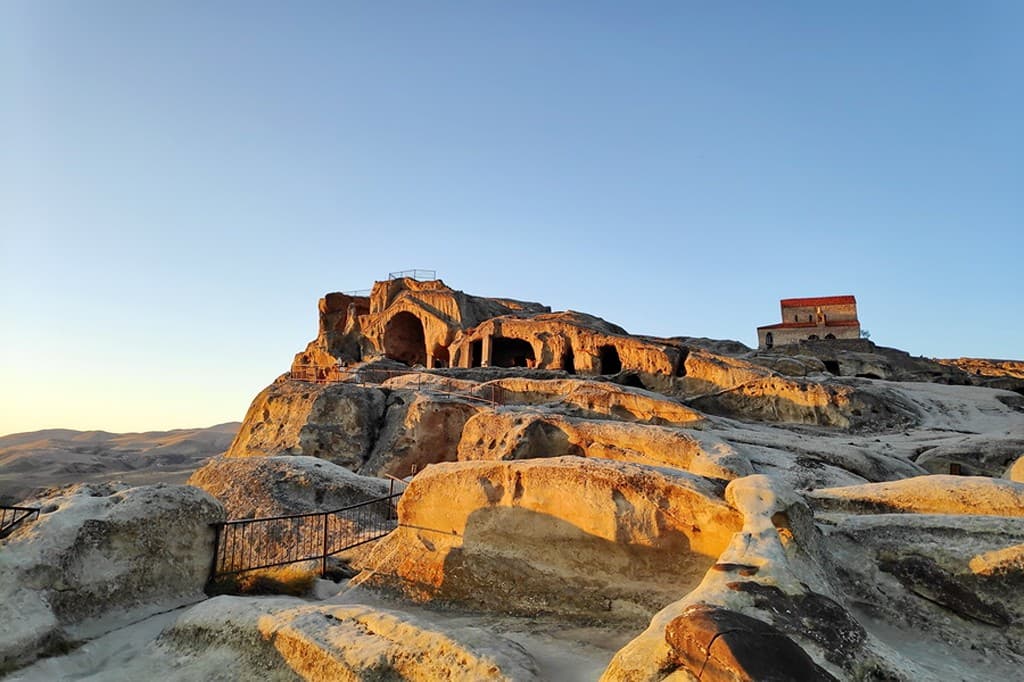
Located just a short drive from the town of Gori, Uplistsikhe (which translates to "The Lord's Fortress") is one of the oldest urban settlements in the Caucasus. Its history spans from the Early Iron Age (around the 2nd millennium BC) to the Late Middle Ages.
The Pagan Capital
Long before Georgia embraced Christianity in the 4th century, Uplistsikhe was a major center for pagan worship, specifically dedicated to the Sun Goddess. The city’s design reflects this ancient spiritual focus. As you wander through the complex, you will see ritual pits once used for animal sacrifices and temple structures that align with the celestial bodies.
Architectural Style and Layout
Uplistsikhe is carved into a sandstone massif overlooking the Mtkvari River. The rock here is softer and more rounded than the volcanic stone of Vardzia, giving the city an almost organic, flowing appearance.
The Theater: One of the most unique features is the ancient rock-cut theater, a rare example of Hellenistic influence in the region.
The Long Hall: Also known as the "Hall of Queen Tamar," this space features a ceiling intricately carved to mimic the wooden beams of a traditional Georgian home, showcasing the transition from wood to stone architecture.
The 10th-Century Basilica: In a fascinating display of religious layering, a small Christian church was built directly atop the ruins of a pagan temple in the 10th century, creating a visual timeline of Georgia’s spiritual evolution.
Accessibility
Because it is situated only about 90 minutes from Tbilisi, Uplistsikhe is highly accessible. It is a popular choice for day trippers who wish to combine history with a visit to the nearby Mtskheta (the ancient capital) or the Stalin Museum in Gori. The terrain is rocky and can be slippery, but it is generally manageable for most fitness levels.
Vardzia: The Royal Cave Monastery
If Uplistsikhe is an ancient town, Vardzia is a towering vertical skyscraper of stone. Located in the southern region of Samtskhe-Javakheti, near the border with Turkey, this 12th-century complex is arguably Georgia’s most iconic landmark.
A Fortress Against the East
Vardzia was commissioned by King Giorgi III and completed by his daughter, the legendary Queen Tamar, during the late 1100s. Originally, the city was invisible from the outside, hidden behind the cliff face to protect its inhabitants from Mongol and Persian invasions. However, a massive earthquake in 1283 caused a significant portion of the cliff to collapse, revealing the internal "honeycomb" structure we see today.
The Vertical City
Vardzia once housed up to 50,000 people and consisted of over 6,000 apartments, shops, and cellars spread across 13 levels.
The Church of the Dormition: The spiritual heart of Vardzia is its rock-cut cathedral. Inside, you can see rare, well-preserved frescoes depicting Queen Tamar—one of only four contemporary portraits of the monarch in existence.
The Infrastructure: The sophistication of Vardzia is mind-blowing. The city featured a complex irrigation system that brought fresh water to every level, as well as hidden escape tunnels and secret granaries that allowed the population to survive long sieges.
The Living Monastery: Unlike Uplistsikhe, Vardzia is still a functioning monastery. A small group of monks still resides in a secluded section of the caves, keeping the centuries-old tradition of prayer and candle-making alive.
The Experience
Visiting Vardzia is a physical adventure. It requires climbing steep stairs, navigating narrow tunnels (some of which are over 100 meters long), and walking along narrow ledges. The effort is rewarded with some of the most dramatic views in the country, looking out over the Mtkvari gorge toward the distant mountains of Turkey.
Discover the Echoes of the Past with Vitis Travel
The cave cities of Georgia are more than just ruins; they are a testament to the resilience and ingenuity of a nation that refused to be conquered. At Vitis Travel, we take pride in sharing the stories hidden within these stone walls. Our expert guides will take you beyond the surface, explaining the symbolism of the carvings and the strategic genius of the layouts.
Whether you prefer the ancient mystery of Uplistsikhe or the royal grandeur of Vardzia, we provide the comfort and expertise needed to make your journey unforgettable.
Are you ready to walk through history? Contact Vitis Travel today to book your private tour to Georgia's legendary cave cities.