Georgia Safety Ranking 2026: Facts vs Common Myths
Georgia Safety Ranking 2026: Facts vs Common Myths
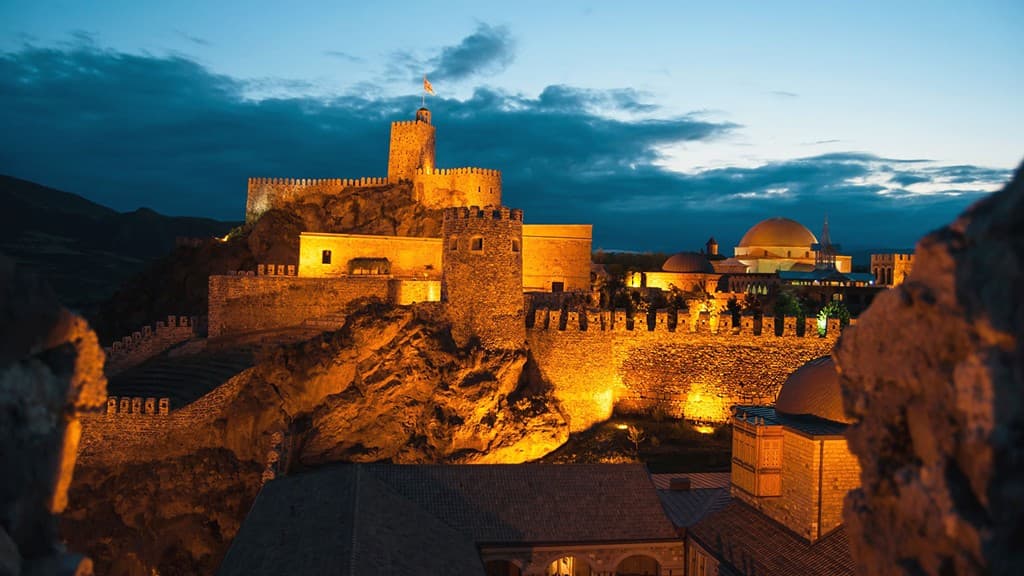
Created by: Vitistravel
March 15, 2026
"Isn't Georgia dangerous?" — it's a question our guides hear constantly. Usually from travelers who have just arrived, looked around Tbilisi's lively streets, and are already wondering why they were so worried.
Georgia has an image problem that its reality doesn't deserve. Misconceptions — often rooted in outdated news, geography confusion, or simply unfamiliarity — keep many travelers away from one of Europe's most rewarding destinations. So let's put the data on the table.
Where Does Georgia Actually Rank for Safety?
The 2025 Global Peace Index ranked Georgia among the top third of all countries globally — ahead of several popular European tourist destinations, including Greece, Italy, and France.
Numbeo's Crime Index tells a similar story. Georgia consistently scores lower on crime than many Western European capitals. Petty theft, which plagues tourist hotspots across Europe, is comparatively rare in Tbilisi's Old Town and main tourist areas.
Georgia also ranks well on violent crime. The murder rate per 100,000 people is below the European average. Attacks on tourists are exceptionally rare — and widely reported when they do occur, which itself reflects how unusual such incidents are.
5 Common Myths About Georgia — Debunked
Myth 1: "Georgia is part of Russia" Georgia has been a fully independent country since 1991, with its own language, culture, currency, and government. It sits at the crossroads of Eastern Europe and Western Asia — not part of Russia, and not the US state of Georgia either.
Myth 2: "There's an ongoing war in Georgia" The conflict with Russia in 2008 was limited in scope and ended quickly. The breakaway regions of South Ossetia and Abkhazia remain disputed but are clearly marked as restricted zones. Tourist destinations like Tbilisi, Kazbegi, Kakheti, and Batumi are entirely unaffected.
Myth 3: "Georgia is a poor, underdeveloped country" Georgia has modernised rapidly. Tbilisi has a thriving cafe culture, excellent infrastructure, fast internet, and a growing international food scene. Tourism has boomed precisely because the experience consistently exceeds expectations.
Myth 4: "Tourists get scammed constantly" Georgia has a deep cultural tradition of hospitality. Tourist scams do exist — as in any country — but they are far less prevalent than in many popular European destinations. The main practical risk is unlicensed taxis at the airport, easily avoided with Bolt or a pre-booked transfer.
Myth 5: "It's unsafe for Western travelers" Georgia receives millions of tourists from the US, Germany, Israel, France, and across the world every year. The UK's Foreign Office, US State Department, and German Auswärtiges Amt all list Georgia as generally safe for travel, with standard tourist precautions.
What Travelers Should Actually Watch Out For
Being honest about safety means acknowledging real — if minor — risks alongside the reassuring statistics. Here's what experienced Georgia travelers actually flag:
Unlicensed airport taxis. Always use Bolt or a pre-booked transfer from a licensed company.
Mountain road conditions in winter. Kazbegi and Gudauri roads require care from October to April.
Petty theft in crowded markets and on overnight trains. Standard travel precautions apply.
Drinking culture. Georgian wine and chacha flow freely at supras. Know your limits.
Currency exchange. Use official exchange booths or ATMs — street changers often shortchange tourists.
How Georgia Compares to Other Popular Destinations
Georgia vs Italy: Georgia ranks higher on the Global Peace Index. Pickpocketing in Rome or Florence is significantly more common than in Tbilisi.
Georgia vs Turkey: Georgia consistently outperforms Turkey on safety indexes. Both are excellent destinations, but Georgia's rural areas feel particularly low-key and safe.
Georgia vs Morocco: Georgia is notably safer by most measures. Solo travelers in particular report a much lower incidence of hassle and unwanted attention.
Georgia vs Greece: Broadly comparable overall. Georgia scores better on violent crime; Greece has more established tourist infrastructure. Both are worth visiting.
Explore Georgia with a Local Guide
Our private day tours from Tbilisi start from 88 EUR. Licensed guides, modern vehicles, flexible schedule — built for travelers who want local knowledge without the guesswork. vitistravel.com/en/tours
FAQ: Georgia Safety Ranking and Facts
How does Georgia rank globally for safety in 2026? Georgia ranks in the top third of countries on the 2025 Global Peace Index — ahead of several popular European tourist destinations including Italy, Greece, and France.
Is Georgia safe compared to other European countries? Yes. By most measurable indicators — violent crime rate, petty theft, tourist safety — Georgia compares favourably with Western and Southern European countries. Pickpocketing and tourist scams are significantly less common than in major European tourist cities.
Is there still conflict in Georgia? The 2008 conflict ended quickly and was geographically limited. The disputed regions of South Ossetia and Abkhazia are off-limits to tourists and clearly marked. All major tourist destinations are completely unaffected.
What do official travel advisories say about Georgia? The UK Foreign Office, US State Department, and German Auswärtiges Amt all classify Georgia as generally safe for tourism, advising standard precautions. None currently advise against travel to the main tourist regions.
Ready to See What Georgia Is Really Like?
9 years, 65,000+ guests, and a team that loves proving the statistics right. Book a private tour and experience Georgia the way it actually is — warm, welcoming, and genuinely wonderful.
vitistravel.com/en/tours | WhatsApp: +995 595 01 88 08