Glass Bridge & Dashbashi Canyon: Complete Visitor Guide 2026
Glass Bridge & Dashbashi Canyon: Complete Visitor Guide 2026
Created by: Vitistravel
May 9, 2026
Standing 240 meters above the canyon floor with a 140-meter waterfall crashing beneath your feet and a transparent glass walkway as the only thing between you and the void — the Dashbashi Canyon glass bridge is one of Georgia's most thrilling modern attractions. Opened in 2022, this engineering feat quickly became a must-visit for travelers seeking an adrenaline rush paired with spectacular natural beauty.
Located about 100 km south of Tbilisi in the Kvemo Kartli region, Dashbashi Canyon is easily accessible as a day trip and combines well with other attractions in the area. This guide covers everything you need to plan your visit.
What Is the Dashbashi Canyon Glass Bridge?
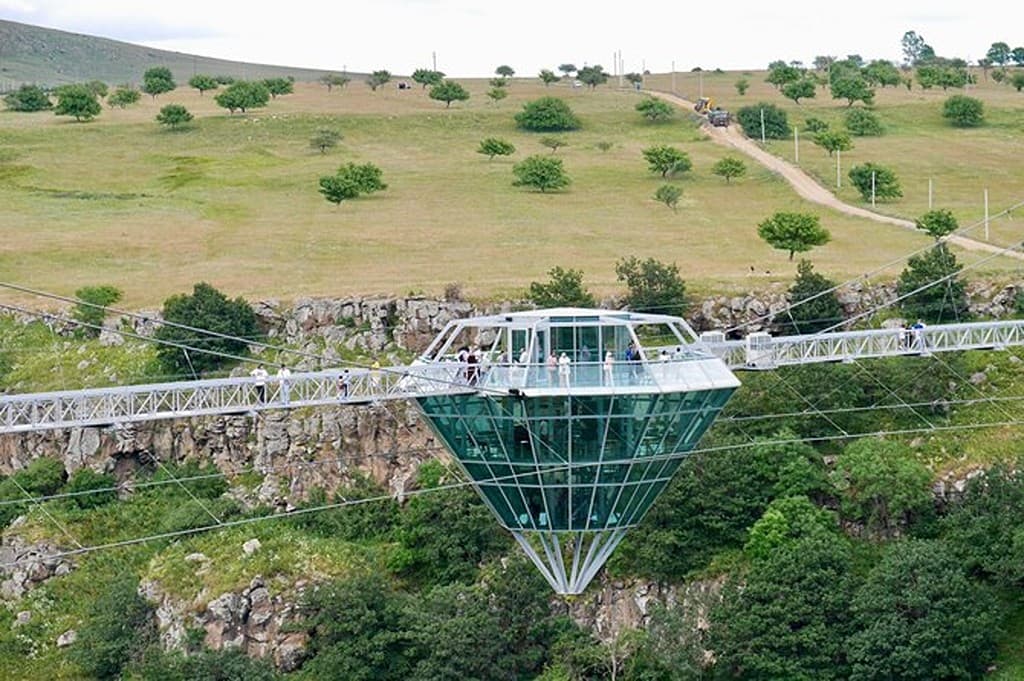
The Dashbashi Canyon glass bridge is a pedestrian walkway that spans the canyon at a height of approximately 240 meters. The bridge extends from the canyon rim to a viewing platform that hangs directly over the gorge, offering vertiginous views of the canyon walls and the waterfall below.
The bridge is constructed with reinforced glass panels and steel supports designed to hold substantial weight. Despite the stomach-dropping views, the structure is engineered to be completely safe. The glass panels are multi-layered and can withstand significant force.
The bridge is also known by several nicknames: the "Diamond Bridge" (due to its diamond-shaped viewing platform), the "Glass Bridge," and sometimes the "Tsalka Glass Bridge" (after the nearby town).
The Canyon Itself
Dashbashi Canyon was carved over millennia by the Khrami River, creating a deep gorge with dramatic basalt cliff walls. The canyon stretches for several kilometers, with depths reaching up to 300 meters in places. The centerpiece is a powerful waterfall that drops approximately 140 meters into the canyon — one of the tallest waterfalls in Georgia.
The surrounding landscape is markedly different from the lush greenery of eastern Georgia. The Kvemo Kartli region has a drier, more continental climate, with rocky terrain and grasslands. In spring (April–June), the area turns green and the waterfall is at its most powerful from snowmelt and spring rains.
Visiting the Glass Bridge: Practical Information
Opening Hours
The complex is generally open daily from 10:00 to 18:00 (last entry around 17:00). Hours may vary seasonally — it is advisable to check current times before visiting, especially in winter months. The site may close during severe weather conditions.
Entrance Fees
Entrance to the canyon complex and glass bridge costs approximately 20–30 GEL per person. Prices are subject to change, so check the latest rates when planning. Children under a certain age may enter free or at a reduced rate.
Time Needed
Most visitors spend 1–2 hours at the site. This includes walking to the bridge, crossing it, taking photos from the viewing platform, and exploring the canyon rim trails.
Facilities
The complex includes a visitor center, restrooms, a small café, and a gift shop. Parking is available on site. The walkways and approach to the bridge are paved and accessible.
How to Get to Dashbashi Canyon from Tbilisi
By guided tour: Day tours from Tbilisi to Dashbashi Canyon run regularly and are the easiest option. The tour typically includes transport, a guide, and often a second stop at the Algeti Reservoir or another nearby attraction. Group tours cost approximately 80–120 GEL per person.
By rental car: The drive from Tbilisi takes about 1.5–2 hours via the Tbilisi–Tsalka highway. The road is paved and in good condition. Navigation is straightforward — follow signs toward Tsalka, then to Dashbashi. Free parking is available at the site.
By taxi: A taxi from Tbilisi costs approximately 120–180 GEL one way. Round-trip with waiting time can be negotiated for 250–350 GEL. This is a good option for small groups who want flexibility without driving.
By public transport: There is limited public transport to Dashbashi. Marshrutkas to Tsalka depart from Tbilisi, but from Tsalka you would need a local taxi to the canyon (approximately 15 km). This option is less convenient and not recommended for time-limited visitors.
What to Expect on the Bridge
Walking onto the glass bridge is an experience that affects different people in different ways. Some stride out confidently, while others take small, cautious steps, gripping the handrails. Both reactions are perfectly normal.
The bridge starts on solid ground at the canyon rim and extends outward over the void. As you walk, the glass panels beneath your feet reveal the 240-meter drop to the canyon floor. The viewing platform at the end offers 360-degree views of the canyon walls, the waterfall, and the surrounding plateau.
On windy days, you may feel slight movement — this is normal and part of the bridge's engineering design, which allows for flexibility. The handrails are solid and at a comfortable height.
Photography tips: the glass can be reflective in direct sunlight. Early morning or late afternoon light produces the best photos. For the waterfall, the best angle is from the viewing platform itself. A wide-angle lens or smartphone panorama mode captures the full scale of the canyon.
Combining Dashbashi with Other Attractions
Dashbashi Canyon works well as part of a full-day itinerary from Tbilisi. Here are popular combinations:
Dashbashi + Algeti Reservoir
The Algeti National Park and its reservoir are located roughly 30 minutes from Dashbashi. The turquoise reservoir set against rocky hills makes a scenic contrast to the canyon. Picnic areas and short walking trails are available.
Dashbashi + Birtvisi Fortress
An ancient fortress built into a rocky cliff, Birtvisi offers a moderate hike (1–2 hours) with rewarding views. It pairs well with Dashbashi for travelers who enjoy both natural and historical sites.
Dashbashi + Bolnisi & Dmanisi
For history enthusiasts, the ancient town of Bolnisi (with one of Georgia's oldest churches, the 5th-century Bolnisi Sioni) and the archaeological site of Dmanisi (where 1.8-million-year-old human remains were discovered) are both in the same region.
Best Time to Visit
Spring (April–June): The best season overall. The waterfall is at its most powerful from snowmelt, the surrounding landscape is green, and temperatures are pleasant (18°C–25°C). May is particularly recommended.
Summer (July–August): Hot and dry. The waterfall flow decreases compared to spring. Temperatures at the canyon rim can exceed 30°C. Morning visits are recommended to avoid the midday heat.
Autumn (September–October): Pleasant temperatures and smaller crowds. The waterfall flow is lower than spring but the light is beautiful for photography.
Winter (November–March): The canyon is dramatic in winter, with potential ice formations on the canyon walls. However, access may be limited by weather, and the glass bridge may have reduced hours or closures.
Safety and Tips
Wear comfortable shoes with good grip — the walkways can be slippery when wet
The bridge has weight limits and may control the number of visitors at any one time
Vertigo and fear of heights are real — there is no shame in stopping partway
Bring water, especially in summer — the site has limited shade
Wind can be strong at the canyon rim — secure loose items and hats
Drones may be restricted — check current regulations before flying
Book Your Dashbashi Canyon Tour
Vitis Travel offers group and private day tours to Dashbashi Canyon from Tbilisi. Our tours include comfortable transport, an English-speaking guide, and time to fully experience the glass bridge and canyon. We can also combine Dashbashi with other southern Georgia attractions for a complete day out. Contact us to plan your visit.