Sighnaghi Tours: The City of Love in the Heart of Kakheti
Sighnaghi Tours: The City of Love in the Heart of Kakheti
Created by: Vitistravel
April 13, 2026
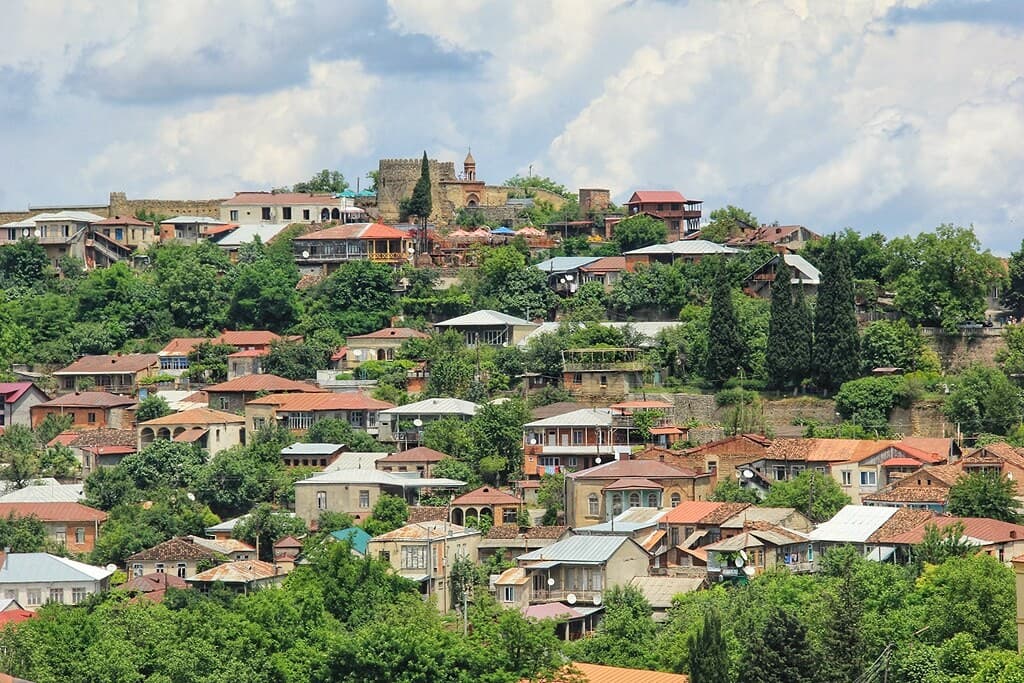
Some places earn their reputation honestly. Sighnaghi — perched on a ridge at the western edge of the Alazani valley, its 18th-century walls catching the last light of the afternoon sun — is genuinely, unaffectedly romantic. It does not try to be. It simply is.
The nickname "City of Love" came partly from Georgia's government, which in 2007 made Sighnaghi the country's first 24-hour wedding registration town — couples could arrive at any hour of the night and marry before dawn. The gesture was a little theatrical. But Sighnaghi did not need the marketing. The cobblestones, the balconies, the view, the wine — all of it was already there.
Why Sighnaghi Belongs on Your Georgia Itinerary
Sighnaghi sits at a junction of several of Georgia's most compelling themes: ancient winemaking, medieval fortifications, the Orthodox spiritual tradition, and the particular Georgian talent for making a guest feel like the most important person in the room.
It is small enough to walk entirely in an afternoon. It is beautiful enough that you will not want to leave. And it sits in the middle of Kakheti — meaning that a Sighnaghi tour is almost always combined with vineyard visits, winery tastings, and the broader wine country experience that makes eastern Georgia so distinctive.
It is also, quietly, one of the best places in Georgia to simply sit: on a terrace with a glass of amber wine, looking out over the Alazani plain toward the white line of the Caucasus, letting the afternoon take care of itself.
What to See and Do in Sighnaghi
The City Walls
Sighnaghi's fortification walls were built in the 18th century by King Erekle II to protect the town and the surrounding villages from raids. Stretching for nearly 4 kilometres and punctuated by 23 towers, they remain largely intact — a remarkable survival. You can walk sections of the walls, climb several of the towers, and find viewpoints that look out over the valley below in three directions.
The best light hits the walls in the late afternoon, turning the stone from grey to warm amber — the same colour, conveniently, as the wine being poured in the bars below.
The Old Town Streets
Sighnaghi's old quarter is a compact grid of lanes lined with two-storey houses, their wooden balconies overhanging the narrow streets. Many are painted in faded terracotta, ochre, and pale blue. Roses climb the walls. Cats occupy every sunny step.
There is no specific route. The right approach is to enter the old town at the main square, pick a direction, and accept whatever you find — a courtyard with a vine-covered table, a woman selling churchkhela from a basket, a wine bar that looks too small to contain the conversation happening inside it.
The National Museum of Sighnaghi
Small but genuinely worthwhile, the Sighnaghi museum holds an impressive collection of works by Niko Pirosmani — Georgia's most beloved folk painter, a largely self-taught artist whose paintings of Georgian feasts, animals, and landscapes have a directness and warmth that no reproduction quite captures. If you know nothing of Pirosmani before you arrive, you will leave wanting to know everything.
Bodbe Monastery
Two kilometres below Sighnaghi, Bodbe Monastery occupies a wooded hillside with the kind of quiet that belongs to places people have been coming to pray for sixteen centuries. The monastery was founded in the 4th century on the site where St. Nino — the Cappadocian woman who converted Georgia to Christianity — is believed to have died and been buried.
Her tomb is inside the church. The garden around it, tended by the nuns who still live here, is planted with roses and old fruit trees. Below the monastery, a path descends steeply through the forest to the St. Nino spring — cold, clear water that pilgrims have been drinking for a very long time.
Bodbe is not a tourist attraction. It is a living religious community. Visit with the same quiet respect you would bring to any sacred place.
The View
This deserves its own section. From the walls of Sighnaghi, or from any of the terraced restaurants and wine bars on the western edge of town, the view across the Alazani valley is extraordinary. The valley floor is a patchwork of vineyards, orchards, and villages. Beyond it, the Greater Caucasus mountains form a white jagged line against the sky that, on clear days, seems impossibly close for something so enormous.
In spring the valley is green and soft. In autumn it turns gold and amber. At any season and in any light, it is a view that stops conversation.
Day Trip from Tbilisi to Sighnaghi
Sighnaghi is approximately 110 kilometres east of Tbilisi — about 1.5 hours by road through the gradually opening landscape of Kakheti. The route passes through the Gombori pass, a winding mountain road with its own views, before descending into the valley.
A day trip from Tbilisi to Sighnaghi is entirely comfortable as a single day, particularly if you combine it with one or two winery stops along the way. Leaving Tbilisi at 9am gives you a full afternoon in town, time at Bodbe, and a sunset from the walls before the drive back.
For those who want more — and Sighnaghi has a way of making people want more — staying overnight transforms the experience entirely. The town empties of day visitors by early evening and becomes something quieter and more intimate. Several excellent small guesthouses and boutique hotels operate within the walls.
Sighnaghi as Part of a Wider Kakheti Tour
The most satisfying way to experience Sighnaghi is as part of a fuller Kakheti itinerary — combining it with vineyard visits, a Qvevri winery, the Alaverdi Cathedral, and the wine villages around Telavi. This kind of itinerary works best over two days, with an overnight in either Sighnaghi or Telavi.
Vitis Travel's Georgia private packages include several Kakheti-focused options that weave Sighnaghi into a wider wine country experience — including harvest season programmes during October's Rtveli.
Sighnaghi for Couples and Honeymooners
The City of Love reputation is well-earned for romantic travel. The combination of beauty, wine, unhurried pace, and genuine Georgian hospitality makes Sighnaghi one of the most naturally romantic places in the Caucasus — and a genuinely unusual honeymoon destination for couples looking for something beyond the standard.
A private Sighnaghi tour can be arranged around a candlelit dinner at a family winery, a sunrise walk on the walls, a private tasting at a boutique producer, and an afternoon at Bodbe. It requires no theatrical gestures. The place does all the work.
Practical Information
Distance from Tbilisi: ~110 km, approximately 1.5 hours by road
Best time to visit: April–June (green valley, clear mountain views) and September–November (harvest, golden light)
How long to spend: Half a day minimum; one full day ideal; overnight strongly recommended for those who can manage it Getting there: By private car or organised tour — public transport exists but is slow and infrequent
Where to eat: Several good restaurants on the main square and along the walls; most serve Kakhetian wine by the jug and traditional food by the plateful
Wine shopping: Small wine shops and producers sell directly in town — the local Rkatsiteli and Saperavi are excellent value